Beiteddine Palace
The 200-year-old palace of Emir Bashir Shihab II — courtyards, hammams, and one of the finest mosaic collections in the Levant.
Chouf — Mount Lebanon
A 19th-century palace masterpiece beside a red-roofed village that once served as Mount Lebanon's capital.
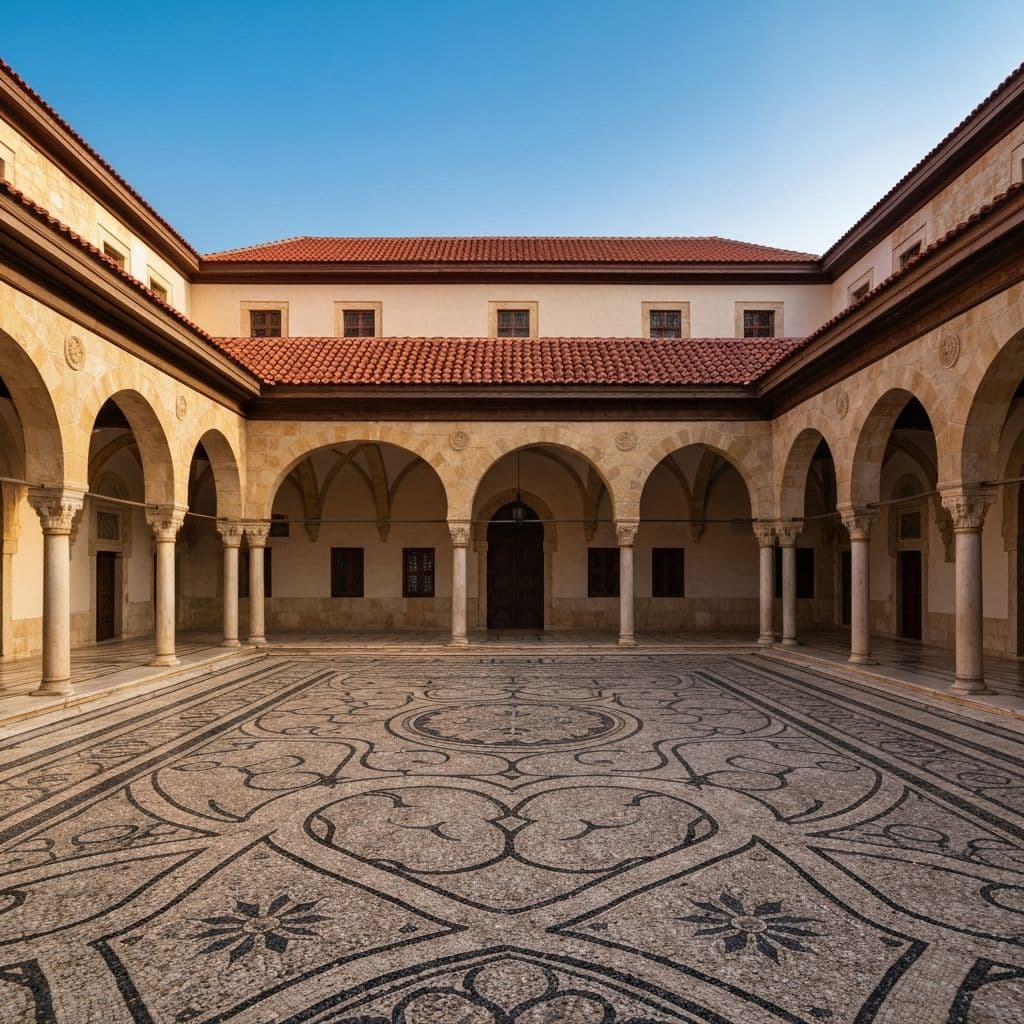
Located in the Chouf mountains, the Beiteddine Palace is a masterpiece of 19th-century Lebanese architecture. Just nearby is Deir el Qamar, a picturesque village with red-tiled roofs and stone houses that served as the capital of Mount Lebanon.
The shortlist we always send first. If you have only one afternoon, start here.
The 200-year-old palace of Emir Bashir Shihab II — courtyards, hammams, and one of the finest mosaic collections in the Levant.
A protected village of red-tiled houses, the 17th-century Fakhreddine Mosque, and the Mir Amin Palace.
A second 19th-century palace built by Bashir for his son — now a heritage hotel with a panoramic terrace.
The country's largest nature reserve, with five cedar groves and trails leading to Barouk and Maaser Ech Chouf.
The corners that don't always make the guidebooks but reward the curious.
Byzantine-era mosaics from Jiyeh laid into the palace’s underground vaults — a rare in-situ display.
The folkloric castle a few kilometres away — kitsch in the best way, with miniature dioramas of Lebanese village life.
Where the place comes alive — concerts, festivals, beach clubs, and the best ways to fill an evening.
Summer concerts staged inside the palace — a tradition since 1985, with everyone from Caetano Veloso to Yo-Yo Ma.
Easy half-day hikes through ancient cedar groves — the Maaser entrance is the most photogenic.
Several village houses welcome visitors for traditional sweet coffee and saj bread.
Tested addresses across categories — from village mountain food to fine modern Lebanese.
A short drive towards Broumana — Lebanese mezze with one of the finest mountain views in the country.
On the main square of Deir el Qamar — traditional Lebanese in a stone house with an arched terrace.
Several roadside spots near the palace serve frikeh, kishk, and saj bread — village cooking at its best.
Locally made, locally sourced, and small enough to fly with — what to actually buy.
Cold-process soaps and distilled rosewater from the Chouf villages — sold in unmarked white bottles.
Buy a tin of homemade kishk (fermented bulgur and yoghurt) from a village co-op.
Single-village wildflower honey from the cedar reserves — sold by the apiarists themselves.
Continue the field guide